The building of the first bath at Haviland’s Cove:
A Zonta Club Service Project in 1926
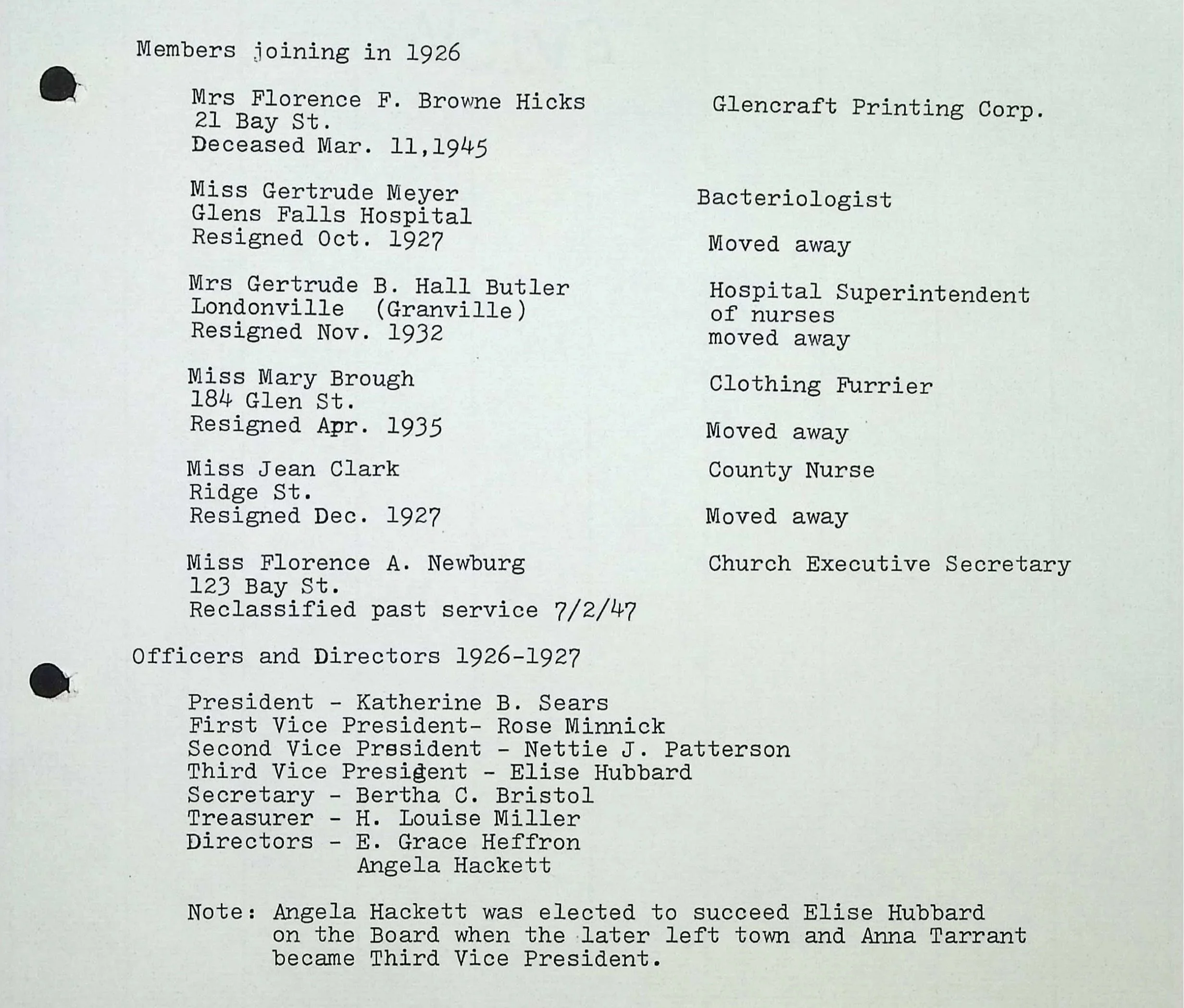
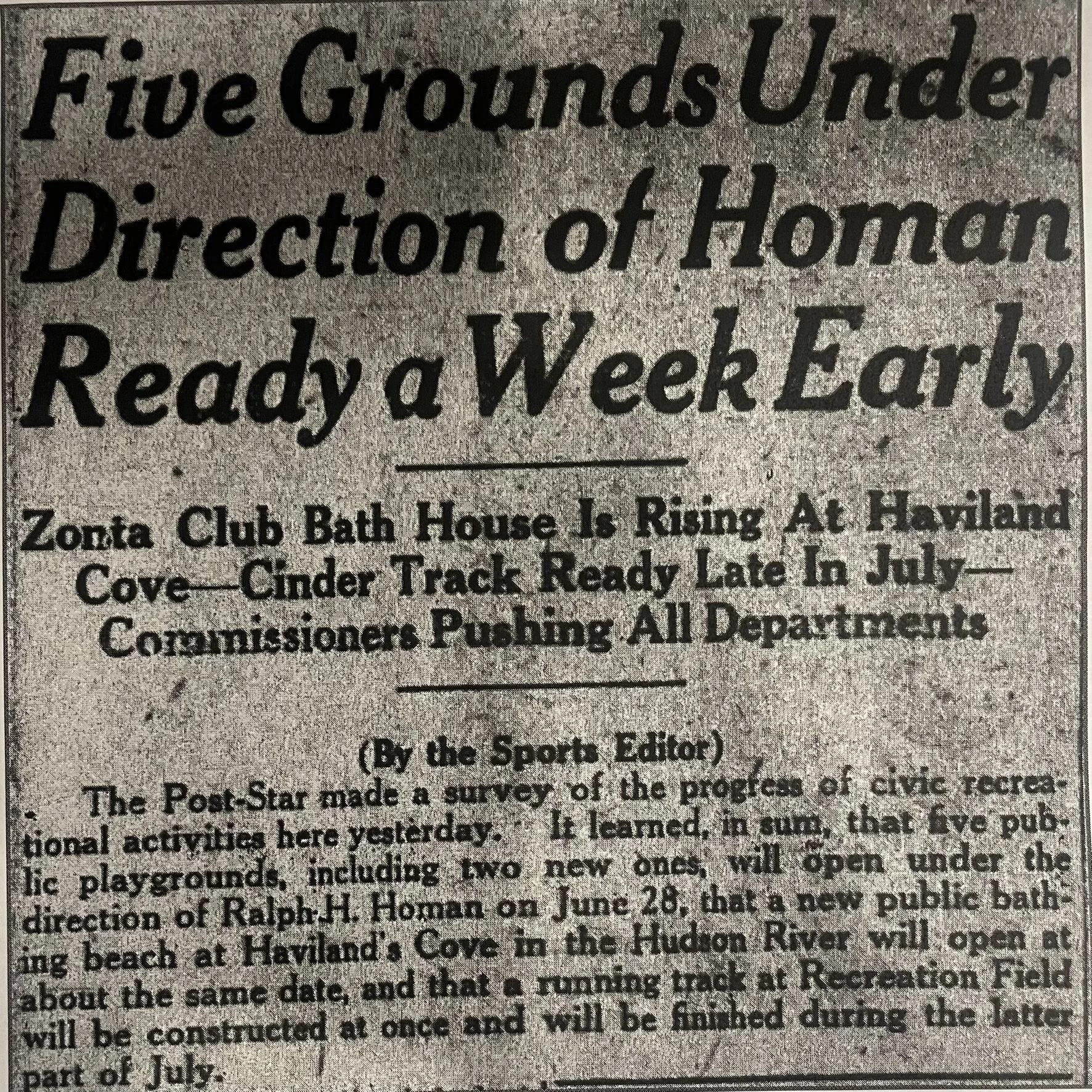
Procured from the historical archive of the Zonta Club in the Folklife Center at the Crandall Library, the thorough description of the Zonta Club Service Project illuminated the important figures in the city at the time.
Elmer J. West, President of Adirondack Light and Power, a very public-spirited man, gave the Zonta Club the right to build a bath house at Haviland’s Cove for the use of the children of the city.
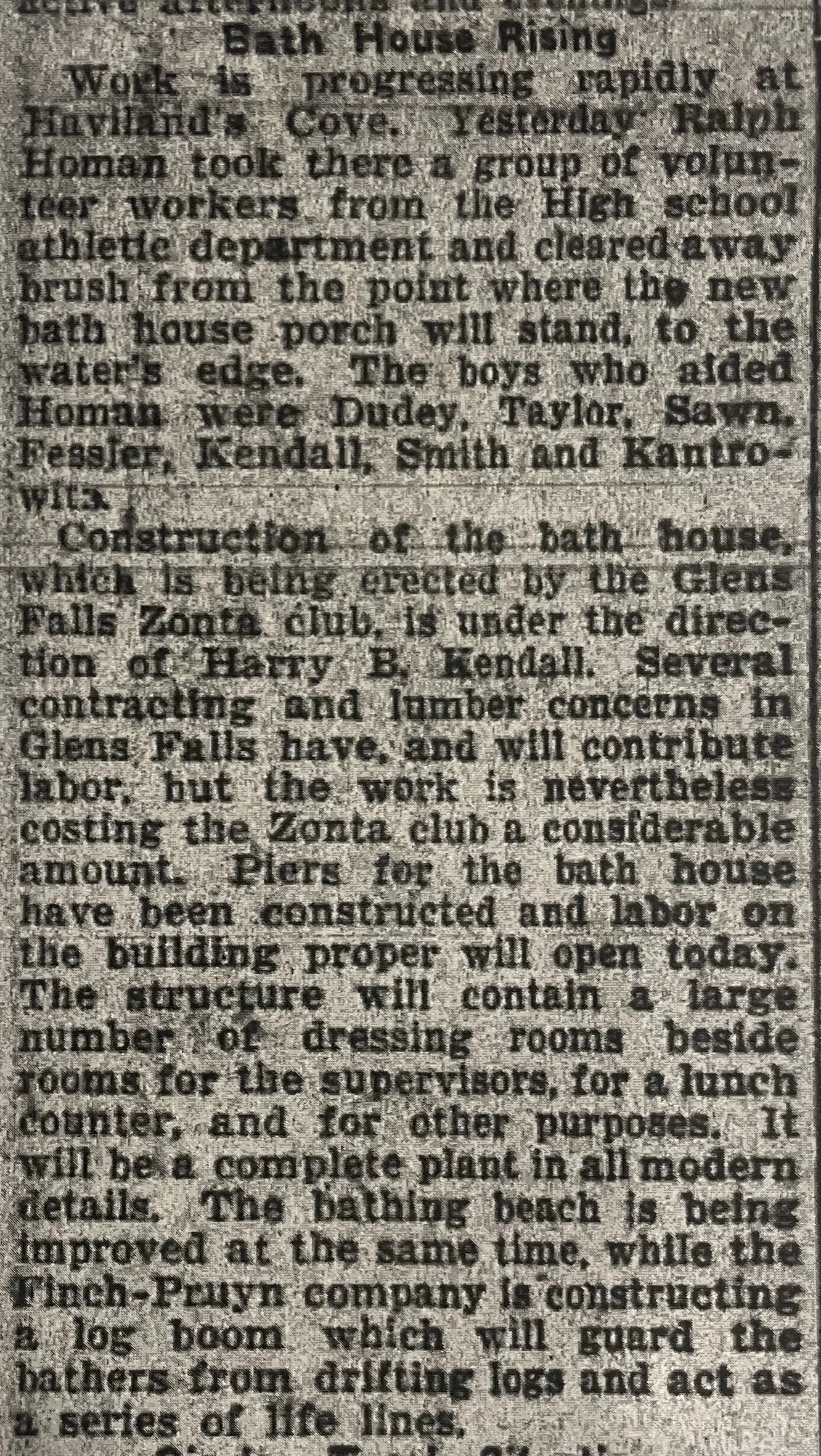
Harry B. Kendall, architect at Finch Pruyn, drew the plans for the bath house and personally, without any charge, supervised its building.
Finch Pruyn sold the club the lumber and building materials at wholesale price.
Many people volunteered labor to help build it.
The following contractors and builders gave men for two or three days with many volunteers working each day.
George Alexander, Duplex Construction Company, Clayton Woodbury, Clarence and Leonard Kingsley, J.B. Hartman, Jerry West, Joseph Fredella, and Robert Rheinlander; The Zonta Club motored these men back and forth to work each day
Walter Robinson, head of the Manual Training Department at the High School, brought his classes up to work several times
Rotary Club husbands helped
Hugh McNair and boys from the YMCA helped
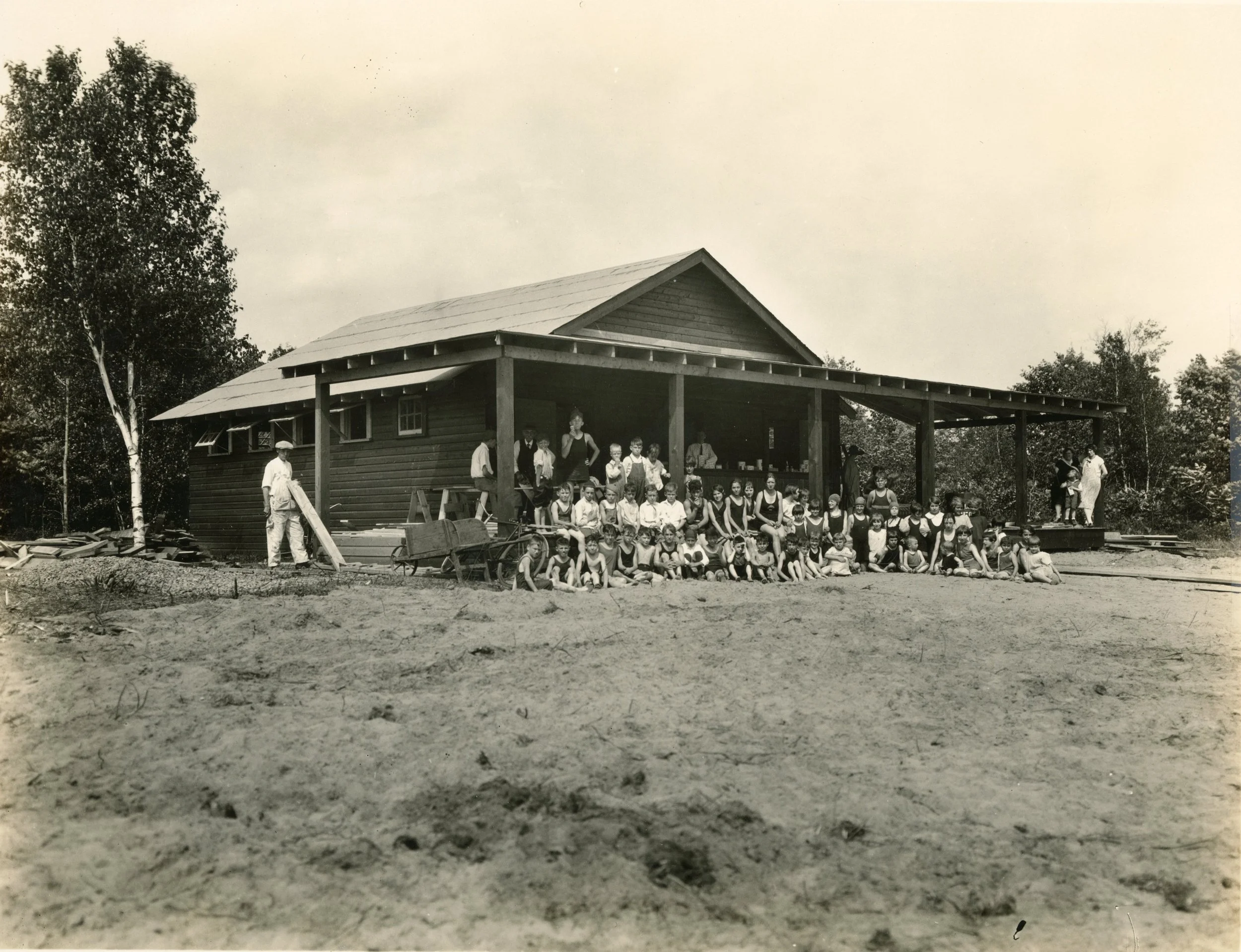
The wooden structure was completed in about three weeks. A big veranda ran across the entire front to shelter people in a storm. Caretaker’s living quarters at rear of the building.
Kendrick and Brown furnished the brown stein and brushes to paint the outside of the building, and the Zonta Club members put the stain on.
International Paper Company gave 88 yards of canvas for the dressing booths.
Merkel and Gelman donated three dozen bath towels.
Finch Pruyn donated use of a big boom to be plated in the river for safety, and Ernest Meyer, city engineer, offered the services of his department to supervise the placing of boom. Expense borne by Zonta Club.
While the bath house was being erected, the clearing of the land to make a good beach was going on. Call Hardware contributed hatchets for cutting out trees and underbrush. George Bayle gave dynamite and men for two days to dynamite stumps from beach. Street Department and Mayor Orville C. Smith and other city officials gave valuable assistance in one way or another. Shovels and tools were loaned etc. Many volunteers and groups worked and, in a surprisingly short time, the opening took place.
No charge for children. 5¢ for adults who wished to check clothing.
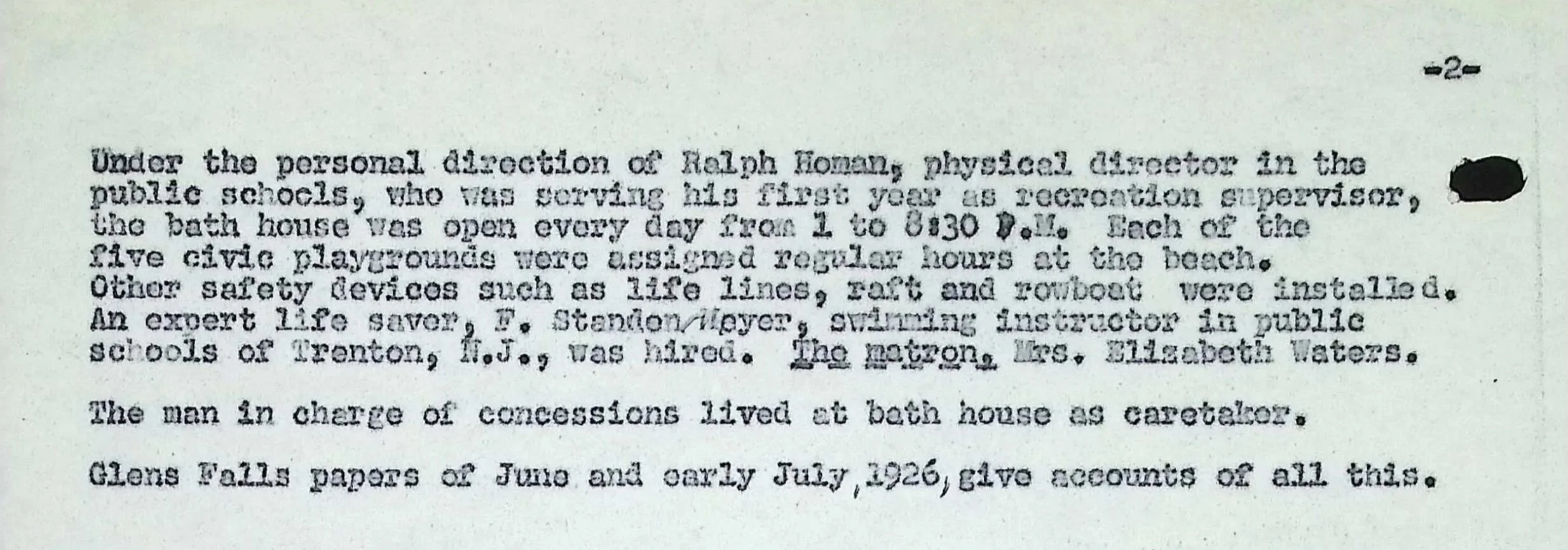
Under the personal direction of Ralph Homan, physical director in the public school, who was serving his first year as recreation supervisor, the bath house was open every day from 1 to 8:30pm. Each of the five civic playgrounds were assigned regular hours at the beach. Other safety devices such as lifelines, raft, and rowboat were installed. An expert lifesaver, F. Standen/Meyer, swimming instructor in public schools of Trenton, New Jersey, was hired. The matron, Mrs. Elisabeth Waters.
The man in charge of concessions lived at the bath house as caretaker.
Glens Falls papers of June and early July 1926, give accounts of all this.
Zonta Club Officers
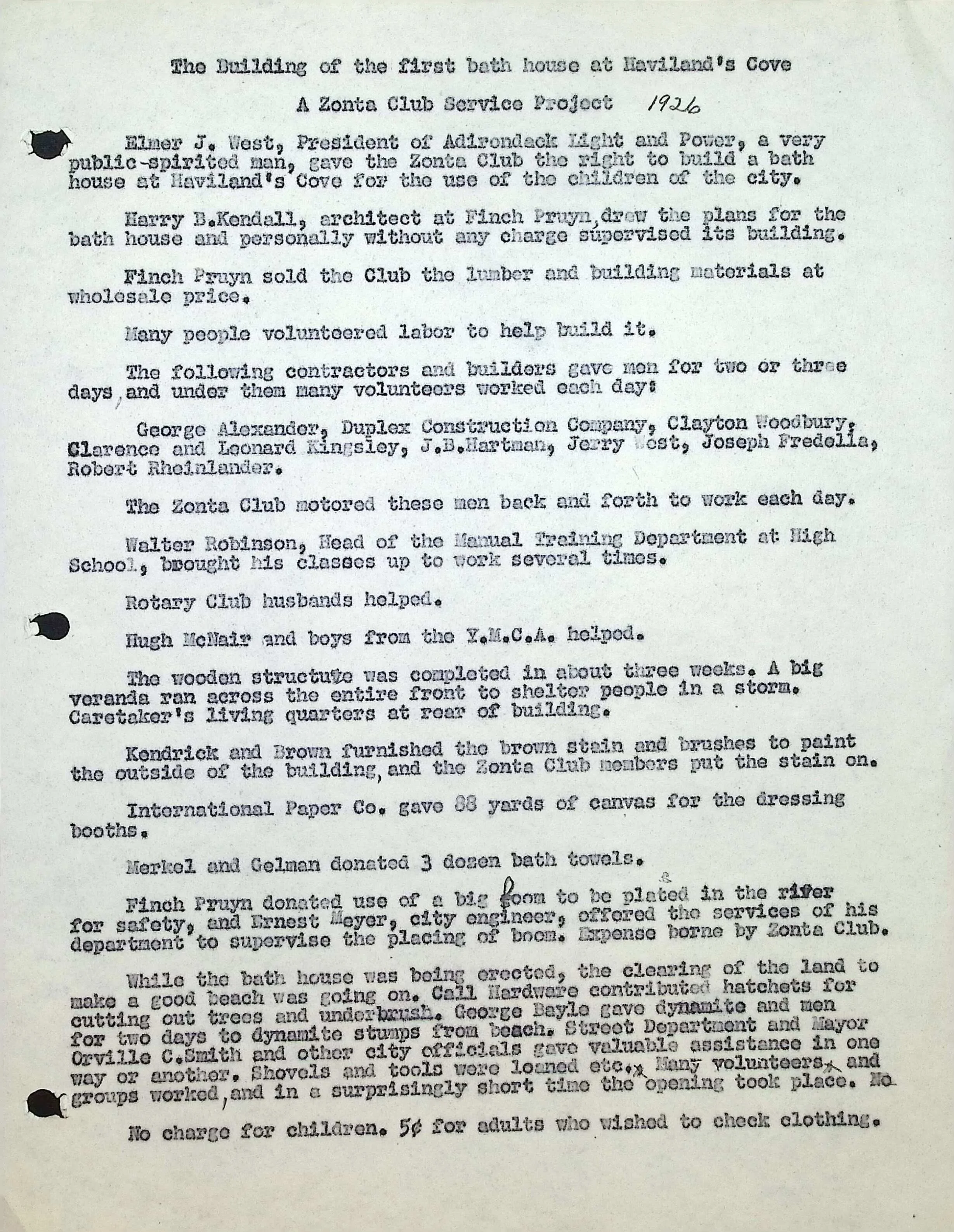
Officers and Directors (1926-1927):
Katherine B. Sears, President
Rose Minnick, First Vice President
Nettie J. Patterson, Second Vice President
Elise Hubbard, Third Vice President
Bertha C. Bristol, Secretary
H. Louis Miller, Treasurer
E. Grace Heffron and Angela Hackett, Directors